

Your First Brush Stroke — Everything You Need to Start

So you've decided to pick up a brush. Maybe you bought your first box of Warhammer, maybe a fellow Wildling inspired you at club night, or maybe you've simply been staring at a pile of grey plastic long enough. Whatever brought you here — welcome. You're in the right place.
The miniature painting hobby has never been more accessible than it is right now. But step into a Games Workshop store or scroll through hobby videos and you'll quickly encounter a wall of paints, specialist brushes, texture mediums, and tools that would test the patience of anyone. It's overwhelming — and it stops a lot of people before they've even started.
Spend less time fussing over equipment and more time actually painting. Paint more, play more. — The Mediocre Hobbies philosophy
Mediocre Hobbies is run by Andy and Laura, an Irish duo making some of the most beginner-friendly, practical miniature painting content on the internet. Their whole approach is built around getting your army painted and getting it on the table. Check them out at youtube.com/@MediocreHobbies — highly recommended for anyone just starting out.
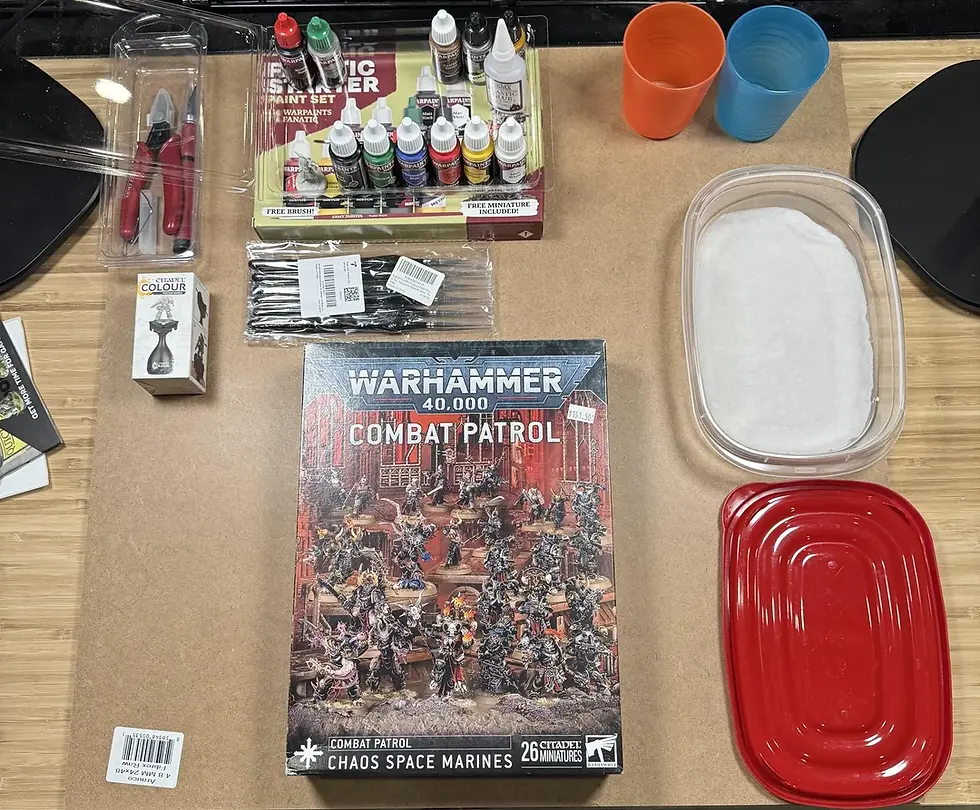
The Honest Starter Kit
Here's what you genuinely need to paint your first miniature to a standard you'll be proud of. Nothing more, nothing less.
The Paints
The Citadel (Games Workshop) paint range is the most accessible for beginners. Here's a starter palette that covers almost any model:
Black primer spray — the foundation for everything
Leadbelcher (base) — metal areas like guns, armour trim, and blades
Retributor Armour (base) — gold details and decorations
Nuln Oil (shade) — the magic wash that adds instant depth to metals
Agrax Earthshade (shade) — warm brown wash, brilliant on skin, bone, leather, and wood
2–3 Contrast paints in your army's colours — one-coat paint that shades itself
Mournfang Brown (base) — basing, leather, wood
White Scar (layer) — highlights, eyes, small details
The Brushes
You need two brushes. That's it. A medium brush (size 1 or 2) for your workhorse work — basecoating, washes, and most detail. And a large scruffy brush for drybrushing. An old, battered brush is actually perfect for drybrushing — in fact it's better than a new one.
Everything Else
A palette — a piece of baking parchment or a cheap ceramic tile works perfectly
A water pot — any old cup will do, change the water regularly
Paper towel — for wiping your brush between colours
A primer spray can — Chaos Black (Citadel) or any black hobby primer
Understanding the Paint Types
Base paints — thick and opaque, used for your first layer of colour
Shade paints (washes) — thin and runny, flow into recesses and create shadow instantly
Layer paints — thinner than base paints, used to build up highlights
Contrast paints — the modern game-changer, one coat that does the work of a base coat and wash combined
Dry paints — thick and chalky, specifically made for drybrushing
The Golden Rules Before You Start
Always prime first. Paint on bare plastic will chip and look patchy. Primer is non-negotiable.
Thin your paints. Thick paint obscures detail and dries lumpy. Aim for the consistency of skimmed milk.
Two thin coats beat one thick coat. Every time. No exceptions.
Don't start with your favourite model. Pick a basic trooper or a spare from a starter kit. Save the hero for when you've got a few models under your belt.
Done is better than perfect. A fully painted army of good-enough models looks spectacular on the tabletop. Chase finished, not flawless.
Every single expert painter once painted a model they were embarrassed by. The only difference between them and someone who never improves? They kept painting.
Come Paint With Us
If you'd rather learn in person than from a screen, you're in luck. The West Allotment Wildlings runs regular beginner army painting sessions at our club in Holystone, North Tyneside. These are relaxed, pressure-free sessions where you'll get hands-on guidance from experienced hobbyists who remember what it felt like to pick up a brush for the first time.
Keep an eye on our Events page for upcoming sessions, or drop us a message to find out when the next one is running.
Next up in the series: Blog 2 covers the one step that beginners skip most often and regret every time — priming. Publishing Thursday 7 May 2026.


Comments