

The Magic of Washes — Instant Depth in a Single Coat
- Stephen Ramsey
- 5 days ago
- 3 min read

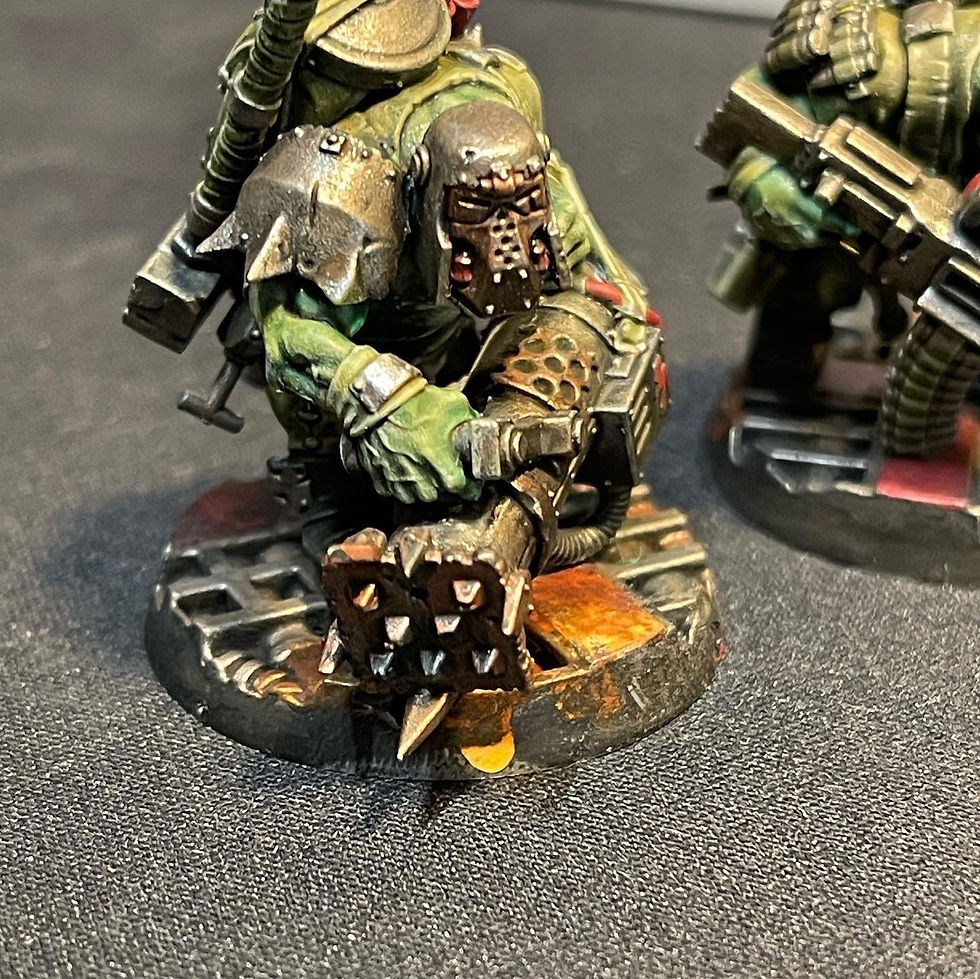
Washes — also called shades — are one of the most powerful tools in a miniature painter's kit. They're thin, heavily pigmented paints with a flow improver that causes them to run into the recesses of a model and settle there, creating instant shadow and depth. No blending. No layering. No advanced technique required.
The Mediocre Hobbies approach consistently uses washes as a core part of their army painting tutorials because they deliver the maximum visual impact for the minimum investment of time. Apply a basecoat, hit it with a wash, and you've got 80% of a finished result before you've even thought about highlights.
The Two Washes You Actually Need
The Citadel Shade range has many options but two are non-negotiable for any painter:
Nuln Oil — black wash, essential over metals, dark armour, mechanical parts, and weapons. The most-used wash in the hobby.
Agrax Earthshade — warm brown wash, brilliant on skin, bone, leather, wood, and earth tones. Adds warmth and depth to organic materials beautifully.
Reikland Fleshshade — orange-pink, more naturalistic for flesh tones specifically
Biel-Tan Green — green wash, great for greenskins and plant matter
Druchii Violet — purple, adds cool atmospheric shadow to armour and robes
If you only buy two washes, make them Nuln Oil and Agrax Earthshade. Between them they cover every model you will ever paint.
How to Apply a Wash — The Right Way
Make sure your basecoat is fully dry. Applying a wash to wet paint causes it to mix and streak. Give your basecoat at least 20 minutes, ideally longer.
Load the brush generously. Unlike base paint, you want plenty of wash on the brush — it needs to flow freely to find the recesses.
Apply and let it flow. Brush the wash over the area and let capillary action do the work. Watch it run into every crevice and groove.
Wick excess from raised areas. On very flat surfaces, the wash can pool and leave tide marks. Dab a clean, slightly damp brush to lift excess from raised surfaces while still wet.
Let it dry completely. Washes look very different wet and dry. Don't judge until it's fully cured — often 20–30 minutes. The colour will deepen and the highlights will pop back through.
The single biggest wash mistake: judging it while it's still wet. Wet wash looks like you've ruined the model. Dry wash looks like magic. Trust the process.
Fixing Tide Marks
Tide marks happen when wash dries with a visible ring around the edge of where it was applied. To fix them while wet, feather the edge out with a clean damp brush. If it's already dried, apply another thin coat of wash over the whole area to blend it in, or rebase the affected area and re-wash.
Washes and Slap Chop Together
One of the most effective combinations in the modern hobby toolkit is using washes alongside a Slap Chop base. After your Contrast paints have dried, a targeted wash on the deepest recesses — particularly Nuln Oil on metallic areas — adds an extra layer of depth that takes the result from good to genuinely sharp.
Mediocre Hobbies often use this in their tutorials: Slap Chop to establish values, Contrast paints for colour, then a final targeted wash on the most important areas. Three steps, excellent result.
Next up: Blog 6 covers colour theory without the art school jargon — picking schemes that actually work on the tabletop. Publishing Saturday 23 May 2026.


Comments